| Detailed description |
| Product Name |
Peanut agglutinin,PNA |
| Product Introduction |
PNA (Peanut Agglutinin) is a plant lectin extracted from peanuts (Arachis hypogaea). It specifically recognizes the galactose-β(1-3)-N-acetylgalactosamine (Galβ1-3GalNAc) structure, namely the T antigen (Thomsen-Friedenreich antigen). This structure is exposed on the surface of various tumor cells, so PNA is frequently used in tumor pathology research and the detection of cell membrane glycoproteins. PNA generally does not bind to sialylated T antigen, and thus it is commonly applied in glycosylation research after desialylation. |
| Specifications |
1mg/5mg/25mg/100mg/500mg/1g |
| Molecular weight |
110 kD (usually composed of 4 subunits, with a monomer of approximately 27.5 kD) |
| Extinction coefficient |
0.89 |
| Form |
Lyophilized powder |
| Usage Method |
It is recommended to dissolve it in a buffer containing 10 mM HEPES and 0.1 mM CaCl2 at pH 7.4. For long-term storage, 0.08% sodium azide may be added. |
| Storage conditions |
Store at -20℃. After thawing, keep at 2–8℃. Do not re-freeze. |
| Carbohydrate binding specificity |
Specifically binds galactose-β(1-3)-N-acetylgalactosamine (Galβ1-3GalNAc) |
| Activity |
The minimum concentration that can agglutinate 2% rabbit red blood cell suspension incubated at 25°C for 1 h < 5μg/ml |
| Purity |
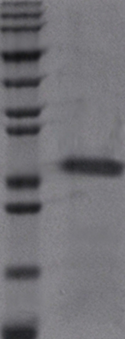
>95%(SDS-PAGE)
|
| Source |
peanut |